As Christmas approaches, we fill our homes with lights, set up the tree, enjoy turrón
and polvorones, and surround ourselves with warm colors like red. But we rarely
stop to think about why we use these symbols and not others. Where do they come
from? What do they represent? Every Christmas element—bells, lights, trees, and
even Christmas markets—has a fascinating history passed down through centuries
that still shapes our celebrations today.
In this article, you’ll discover the origins and meanings behind the most iconic
Christmas symbols so you can enjoy the season with a deeper understanding of its
history. And at the end, we’ll recommend places where you can experience
Christmas in a cultural and magical way.
1. Why do we light up our homes at Christmas?
Lighting streets and homes is one of the most beloved traditions, but its roots go
back much further. Before electricity existed, various European cultures lit candles
and torches during the winter solstice to symbolize the return of light after the
darkest days of the year. Over time, these customs blended into the Christian
celebration of Christmas, where candles came to represent the “light of Christ.”
A major milestone came in 1882 when Edward H. Johnson created the first
Christmas tree lit with electric bulbs, marking the beginning of a tradition the whole
world enjoys today.
2. The Christmas tree: a symbol of life and hope
The modern Christmas tree—usually a fir or pine decorated with ornaments—has a
triangular shape and evergreen leaves that symbolize life, eternity, and hope during
the darkest months.
This tradition began in 16th-century Germany, where Lutheran families decorated fir
trees in their homes as a reminder of renewal. Even earlier, northern European
cultures used green branches during the winter solstice to keep darkness away and
celebrate the return of light.
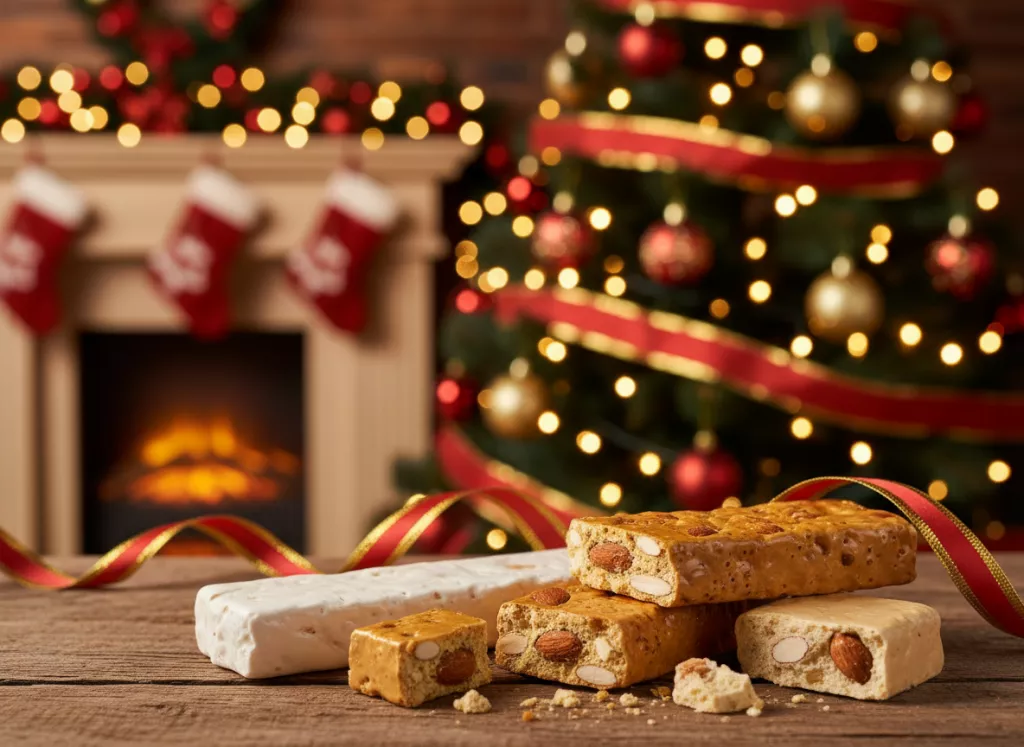
3. Christmas sweets: turrón and polvorones
Turrón traces its origins back to the Muslim tradition of the Iberian Peninsula. Sweets
similar to nougat—made with almonds, honey, and sugar—were already being
produced in Al-Andalus. In the Modern Era, production became centered in Alicante,
especially in Jijona (Xixona).
Polvorones emerged in 16th-century Andalusia as festive sweets made from flour,
sugar, lard, and almonds. Their light texture and long shelf life made them perfect for
Christmas.
4. The color red: a Christmas classic full of symbolism
Red became a classic Christmas color because it evokes strong emotions: energy,
warmth, and celebration. In Christian tradition, it also represents love, the blood of
Christ, and sacrifice. This is why red connects us emotionally to the festive spirit and
appears in decorations, clothing, and lights.
5. Christmas markets: tradition and culture
Christmas markets originated in medieval Europe when Germanic and Central
European cities organized winter fairs to supply their communities.
One of the oldest, the Striezelmarkt in Dresden, was first held in 1434. Over time,
these markets combined food, crafts, sweets, and gifts, evolving into winter
celebrations that blend tradition, culture, and commerce.
6. Iluziona Museum: experience Christmas interactively
Now that you know the history behind some of the most fascinating Christmas
symbols, we invite you to discover the Enchanted Christmas at Museo Illuziona,
because Christmas is even more magical when it’s lived in an interactive and
surprising way. At Museo Illuziona, you can explore these traditions while learning
about the city’s culture in a fun and engaging environment. Interact with stunning
sets, create unforgettable family memories, enjoy the 4D simulator, and much more.
It’s the perfect plan to combine culture, history, and entertainment this holiday
season.
Book your visit to Museo Illuziona and enjoy a magical Christmas with your
loved ones!
WhatsApp us